DPRK
In 2008, I had a rare chance to take a bus trip from South Korea to N. Korea. Here is what I wrote about that adventure.
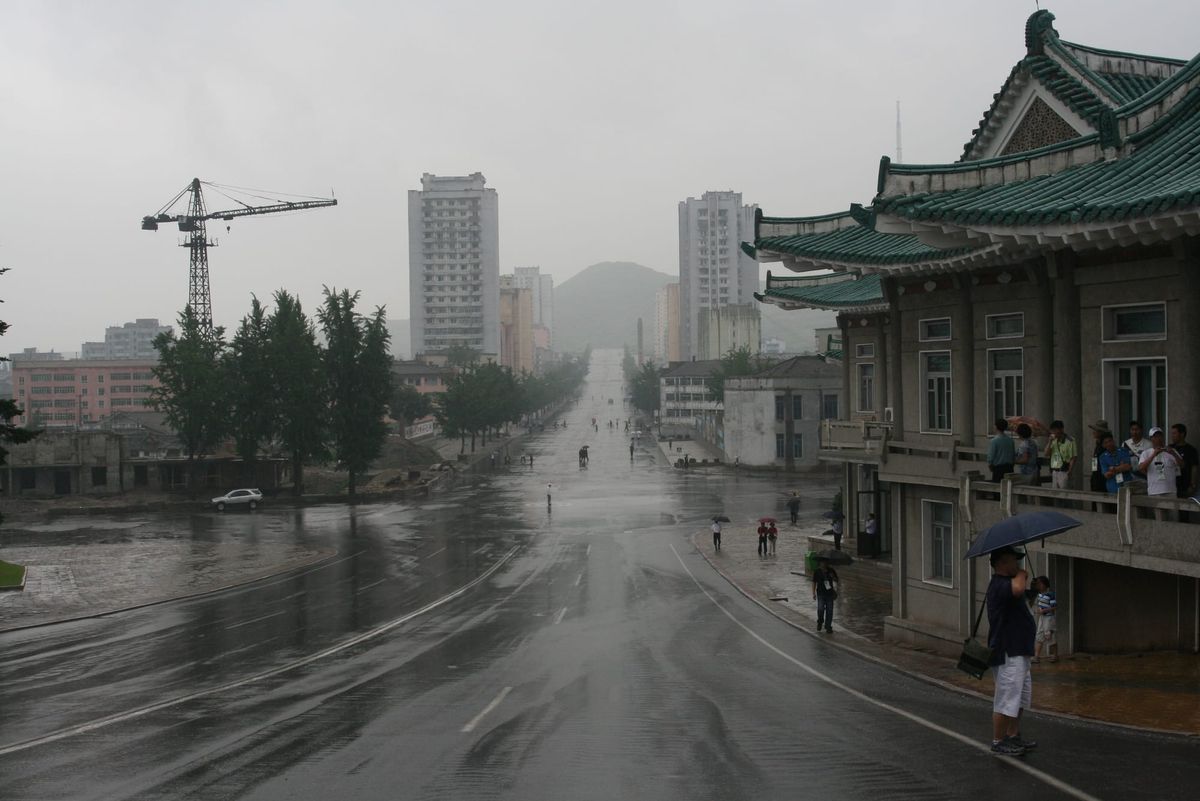
Just got back from one of the most interesting trips I've taken. It was to North Korea (Democratic People’s Republic of Korea). I went with my friend Dwayne and spent one day in the city of Kaesong, which is just north of the DMZ, a one-kilometre border between the North and the South. It supposedly has a population of about 2 million.
The day started with a bus ride and an hour-long drive from Seoul to the DMZ. We got to the “transit office” on the south side and were reminded of the rules: Do not take any pictures while travelling in the bus, do not talk to any of the N. Koreans, ignore the soldiers, do what the N. Korean tour guide says, do not go away from the group. Those were the basic rules of the game. So after about an hour of milling about, we were allowed to board the bus and head through the DMZ.
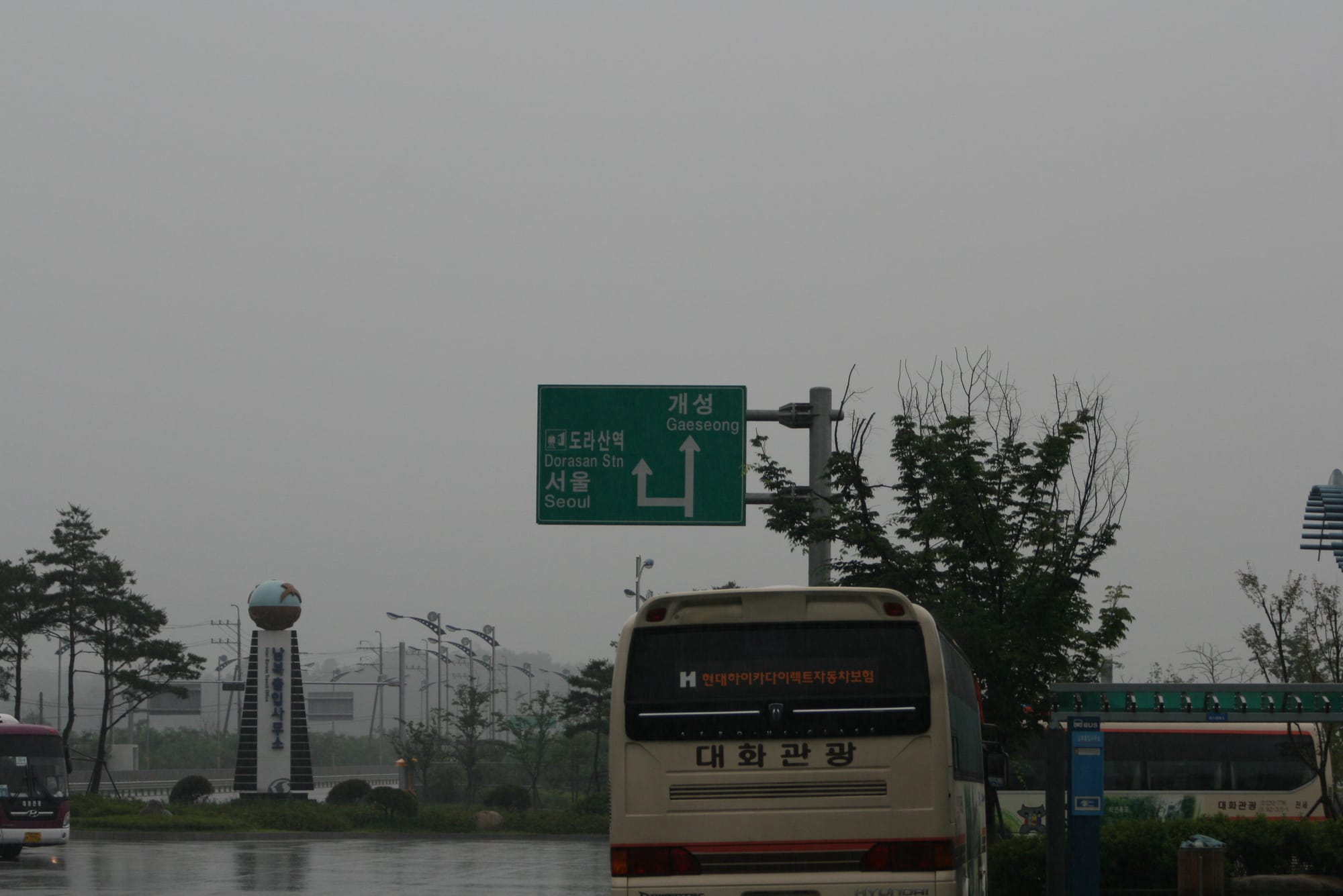
The S. Korean soldiers opened the gates, and the bus rolled through the DMZ. On the road, there were these yellow cones. When the yellow cones turned blue, we crossed over to the North. The DMZ is very green and lush because there are only a few observation posts in it. There are no mines in the DMZ, only on its borders. We reached the other side and got off the bus to go through N. Korean Immigration. There were soldiers lining the area, their machine guns at their backs. They asked a lot of questions and such. We were then asked to get back on the bus to head to one of the first tourist destinations.
The bus rolled past the factories that the South has built just on the other side of the North. The factories make clothing, shoes, pots, pans and so on. The South provides the building, training, food, and the North gives the labour. The factories are new and very modern. I even saw a Family Mart there. There doesn’t look to be any difference until you get past the factories.
The 8 buses rolled into the southern part of the city. That is when you saw the changes. The buildings were concrete and looked like they were built in the 1950’s and never maintained. Some of the buildings had glass, but most of them didn’t. As the bus rolled along, everyone was looking at us, but there weren't many people. A city of about 2 million looked like there were only 100 people, if that. We were told after the tour that those who were not “party members” were not allowed out during the tour. The people were very stone-faced with no expression. The children were walking to school and did not smile, play, laugh, or anything. All we saw were bikes and people walking. The cars or vehicles all had military in them.
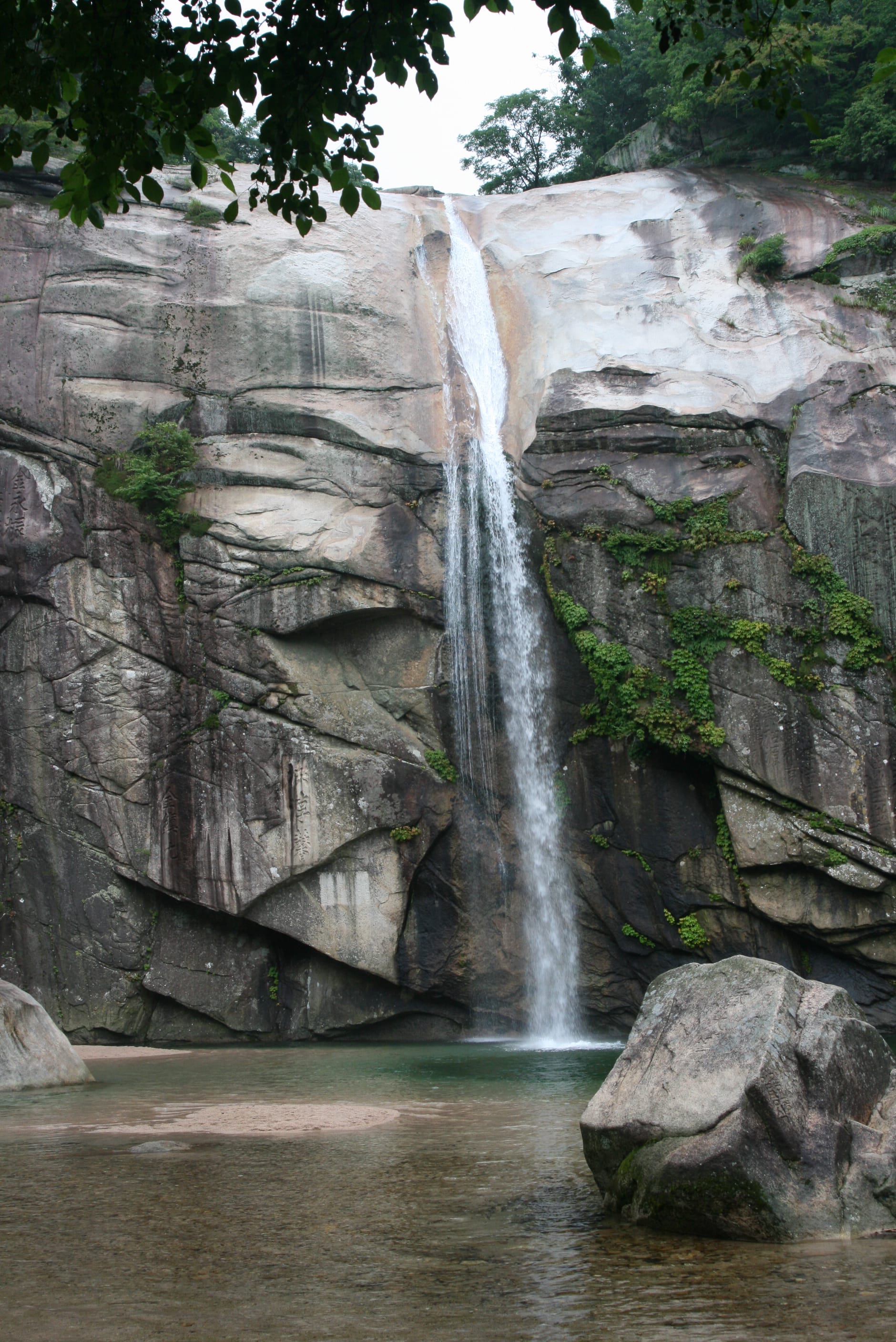
The first place we went to was a waterfall about a half hour out of the city. About every Kilometer there was a soldier standing at attention with a red flag. If you took a picture out of the bus, they would raise the flag, and the buses would stop. The soldiers would board the bus and ask to see any of the pictures you had taken. You were not allowed to take film cameras. Along the way, our N. Korean tour guide sang the anthem of his country, which is similar to the South version.
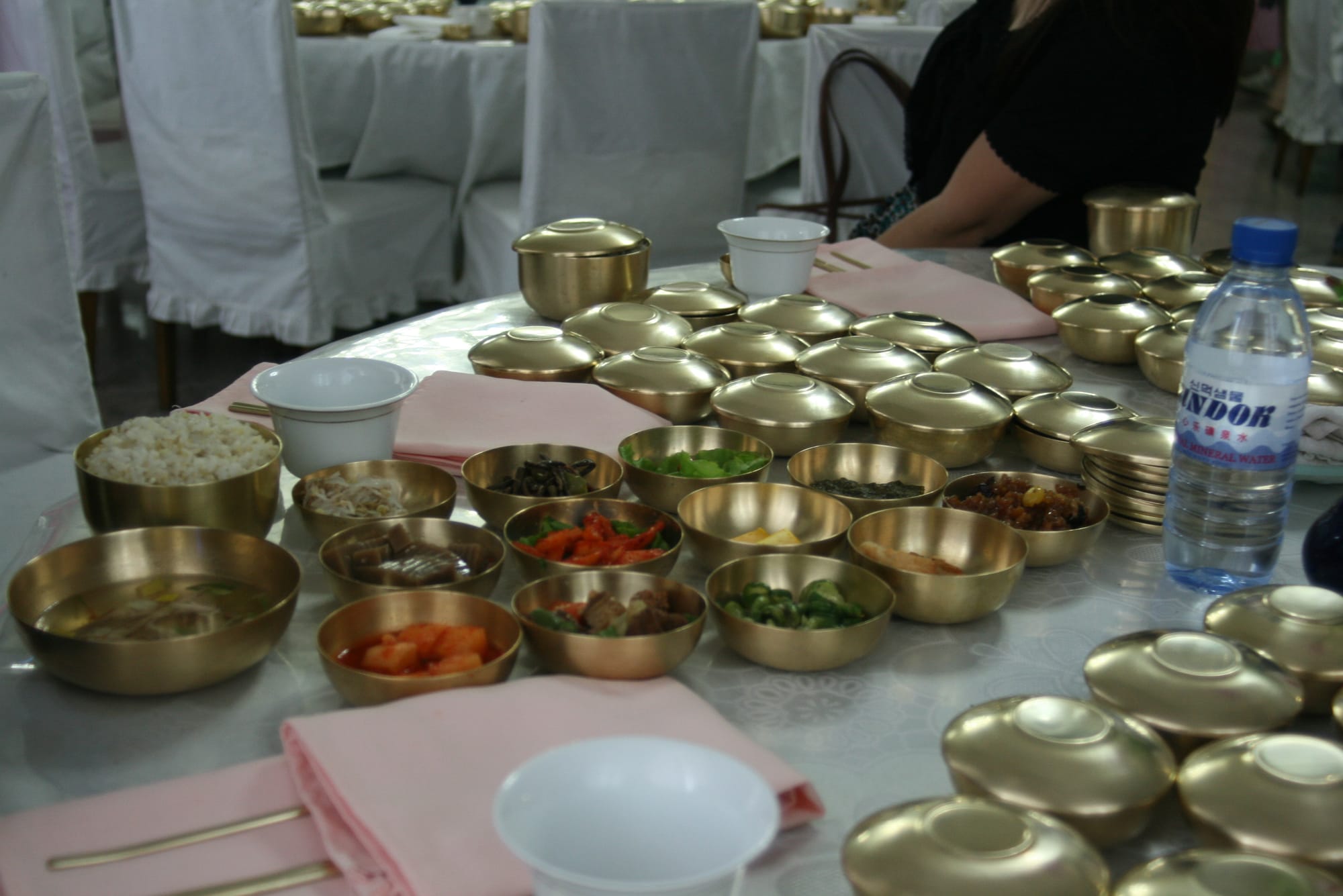
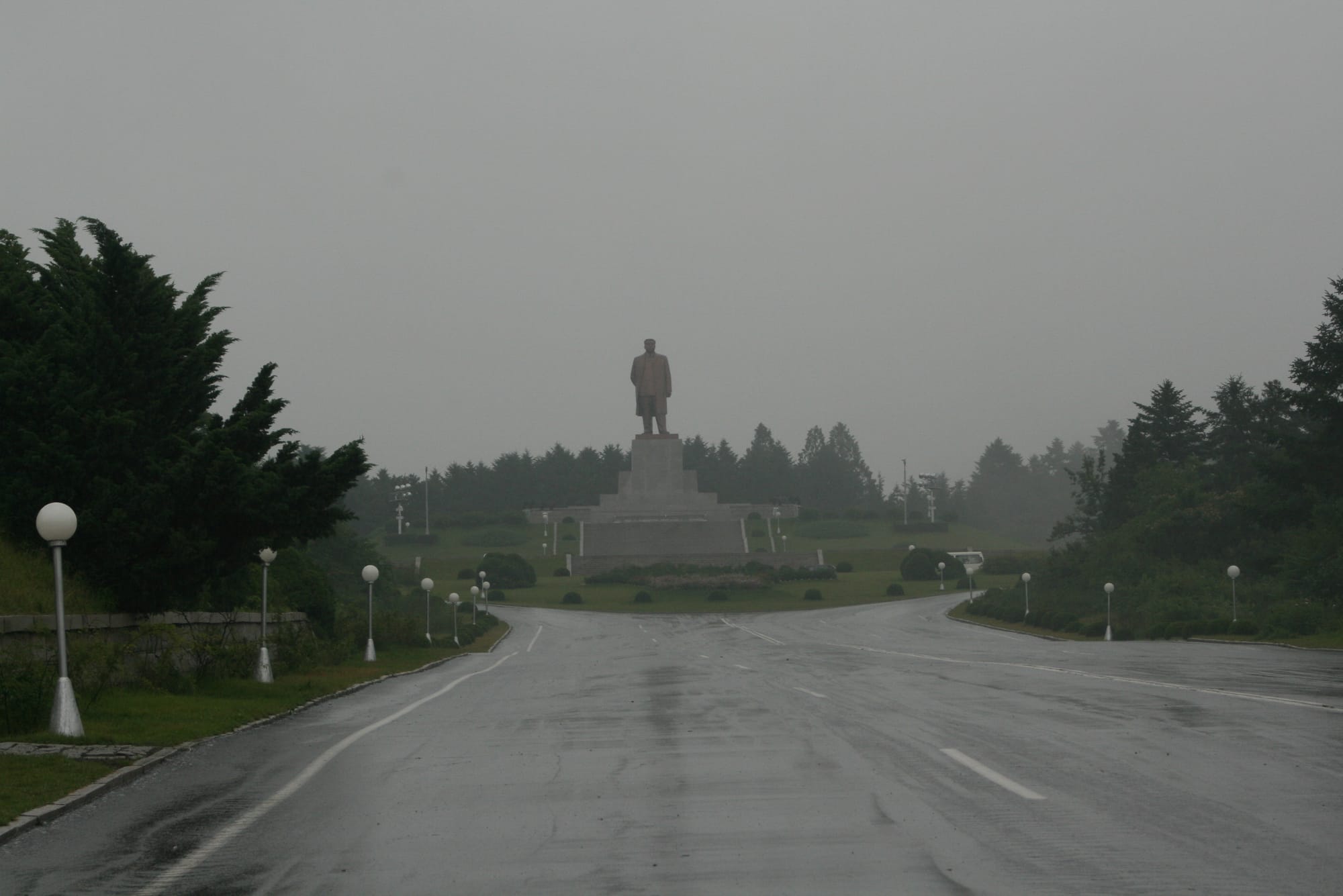
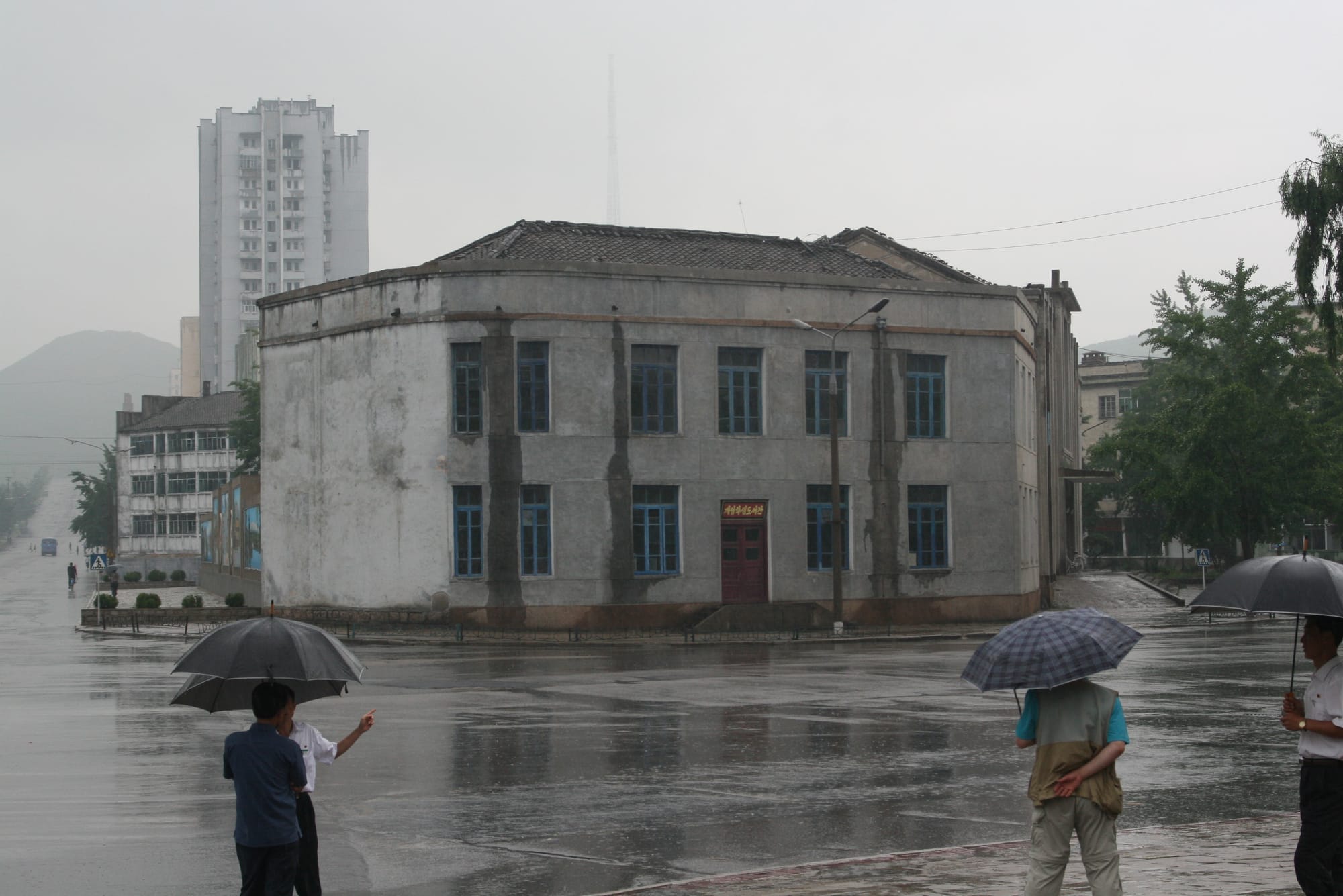
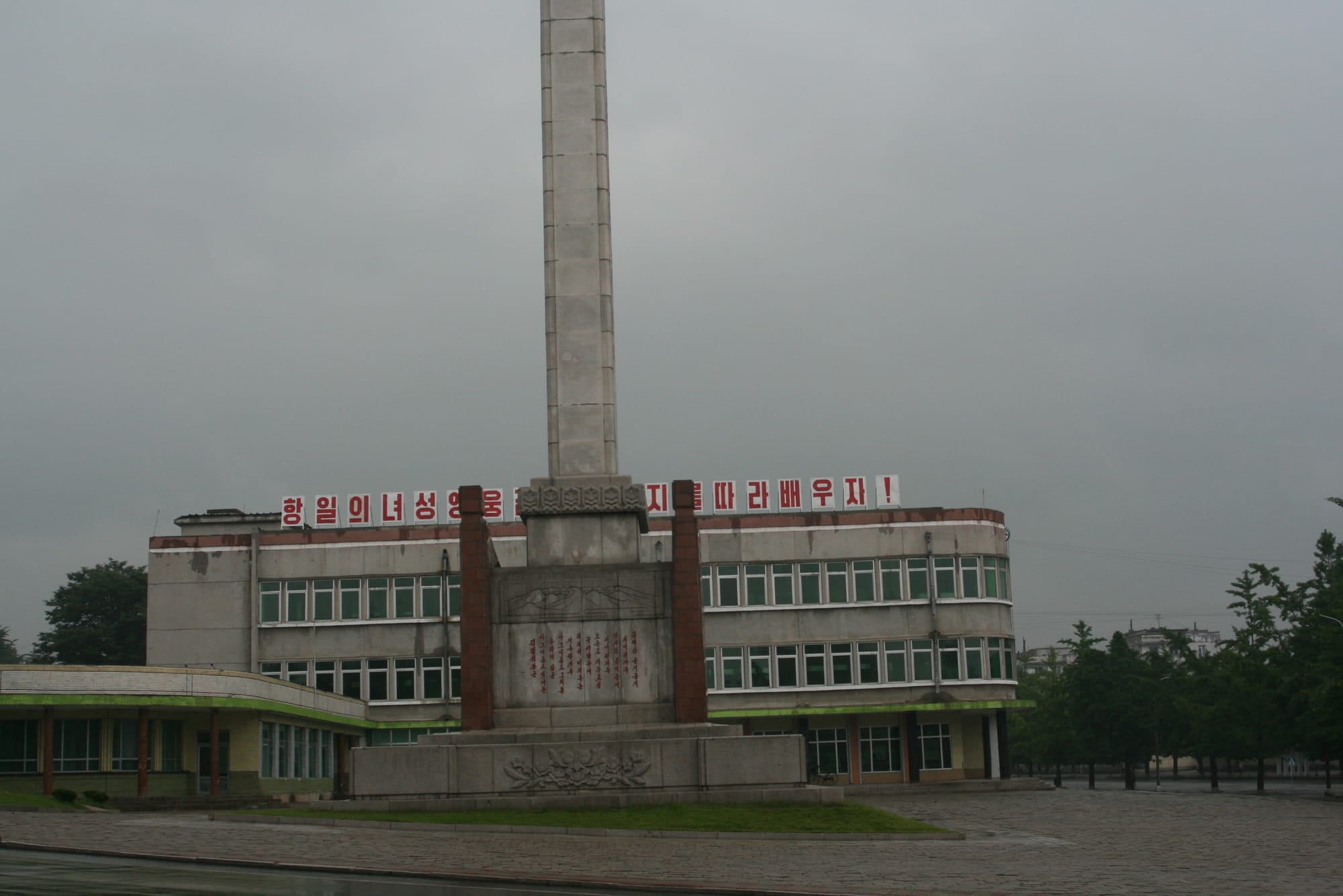
Top Left- Our lunch of many different snacks and rice. Top Right - A towering statue of Kim Il Song. Bottom Left - one of the buildings in Kaesong. Bottom Right - one of the many slogans around the city.
After the tour of the waterfalls, we went to a restaurant for lunch. The food was plentiful and abundant. Along the drives, you could see that they planted crops on every piece of land that could bear them. Lunch was served by women who looked about 14-15 years old. They were shaking as they were serving the food. They looked very small and understandably so. The restaurant was in the middle of the city. I ate quickly and was allowed to walk around this small area. You could take pictures, but again not of the people and not of any building that was not in good condition. It was 1 o’clock, and the streets were dead. There were some people, but none around us. There were guards at the intersections, and people wouldn’t come near us. Up on the hill was a huge bronze statue of Kim Il Sung, the former leader. As we went through the city, you could always see a poster or a huge mural of him and the current president, Kim Jong Il. All of the N. Koreans had pins on with their pictures on them, along with the logo of the Workers' Party of Korea, the communist party. We got back on the bus and headed through the city to see the sights.
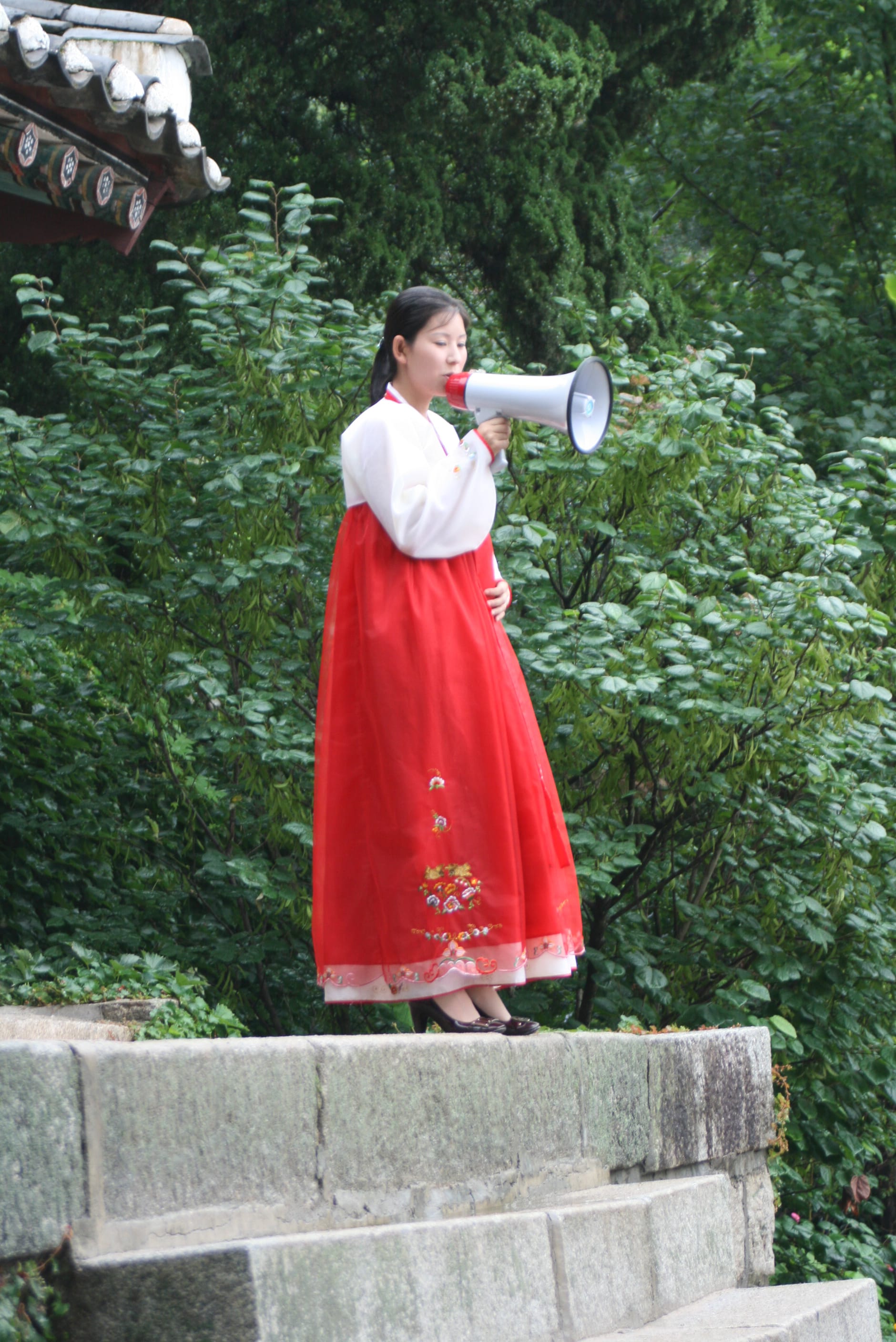
We went to a bridge that was built around 900 AD. All the Koreans looked at it and took pictures of it. I went near a wall. The wall was just short enough that you could see over it and watch the people doing their thing. It was quiet. Around the bridge, it was this wall of noise and clatter. Where the citizens were, you could hear nothing but the rain falling. Children were not playing but walking side by side. There were a lot on bikes, and every once in a while, a bus that looked exactly like the ones in Seoul would go by. Every tourist spot we went to, I tried as much as possible to turn away and look at the people doing their thing. Try to get some sense of what life was like. I was told sternly a few times to turn around and such, but tried again.
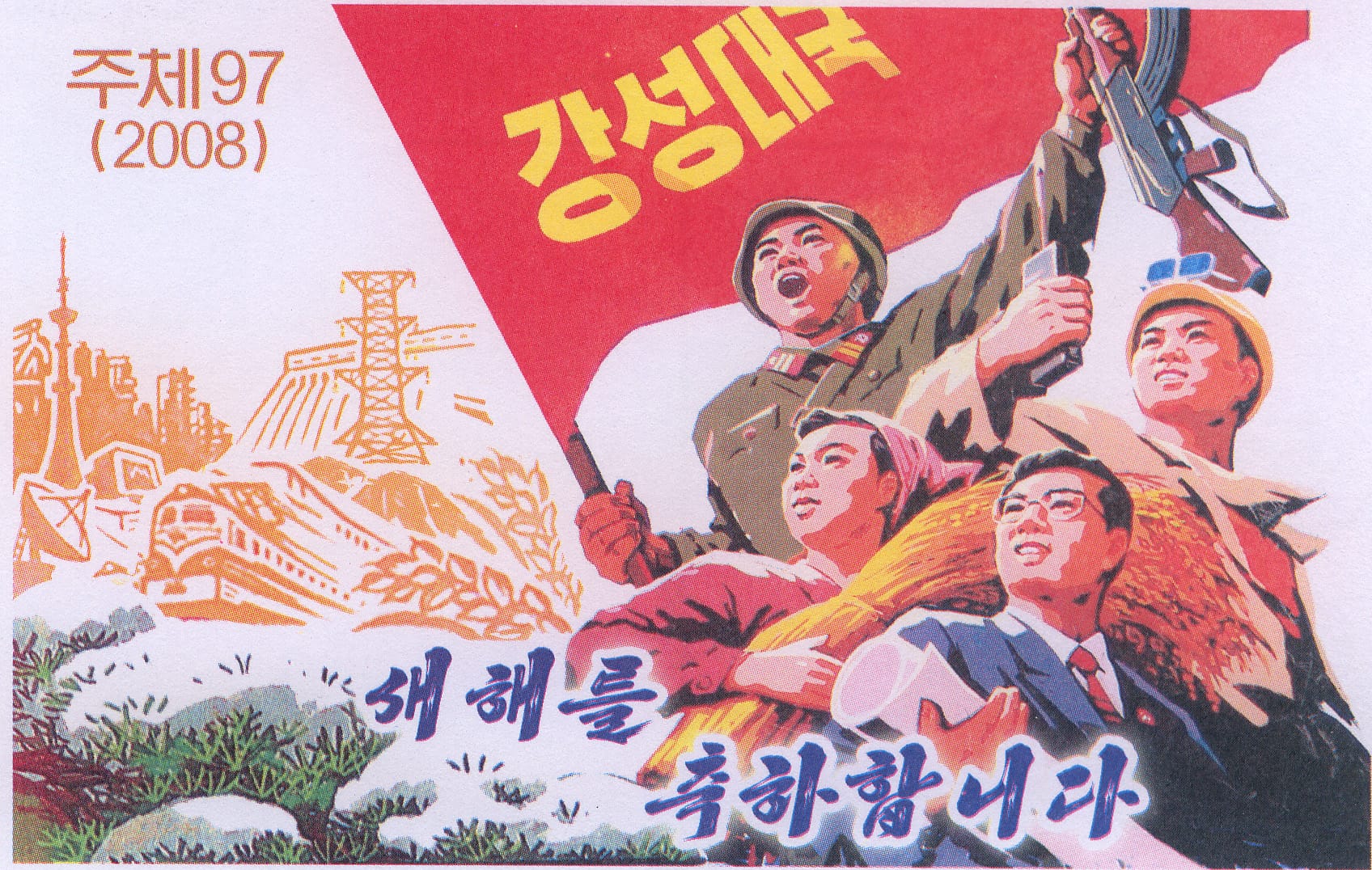
We went to a “duty-free” shop that sold N. Korean beer, soju, stamps, and postcards. I picked up a few and had no addresses to send them to. The Koreans (both sides) were talking and being somewhat friendly. The S. Koreans were drinking while the Northerners were just smoking. They didn’t smile much; they just talked. Don’t know what they said.
After 8 hours in the North, we got back on our buses and headed back to the DMZ. I saw a few more Communist slogans painted on large banners. Then we went back through Korean Customs. We had to show all the pictures we had taken. Ones that were not liked were deleted. Immigration was quick and easy. They didn’t stamp our passports at all, but when we left and came back to the south, they did. We got back to the other side around 5 pm.
All in all, $ 250 US well spent.