Penang’s Blue Mansion
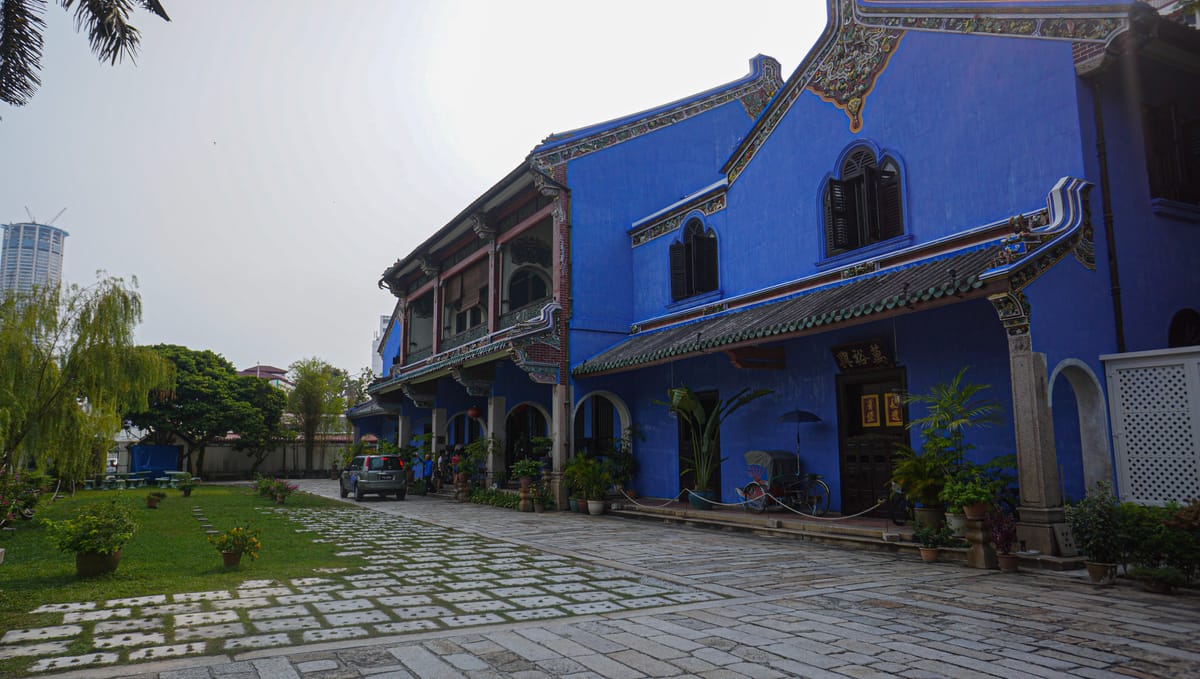
It is hard not to miss the blue walls of the Cheong Fatt Tze Mansion. The deep blue is easy to see from the street and even down it and around the corner. The colour came from the dye used in the cleaner to make the walls white. Over time, the walls began to have a slight blue tone. To make the house stand out more, the whole house is blue.
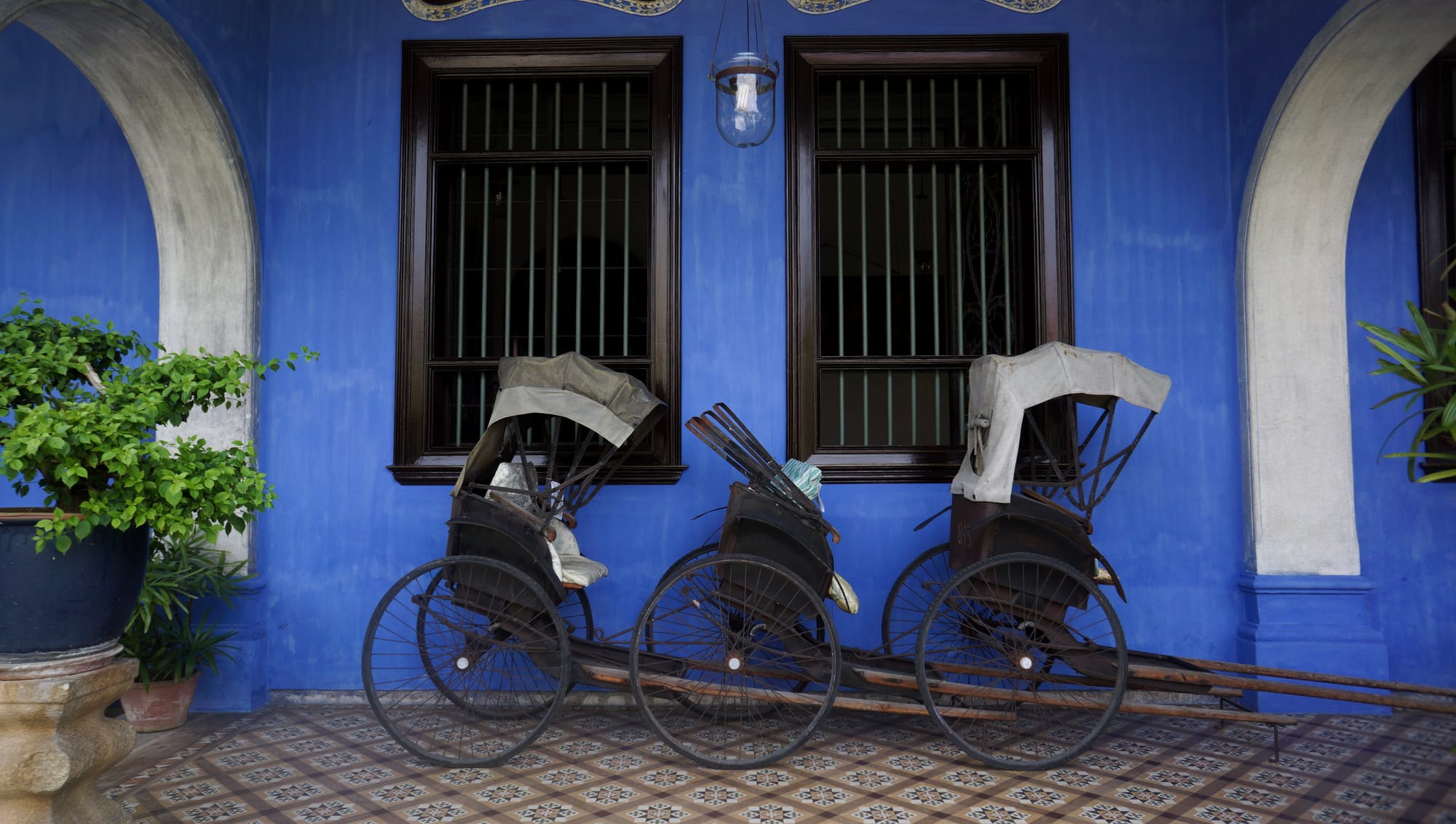
The mansion was built by Cheong Fatt Tze (張弼士), a wealthy businessman who moved to Jakarta in 1856 as a penniless 12-year-old. He started working for a family as a water boy, drawing water from the local wells and carrying it to the house. He caught the daughter's attention, fell in love, and married her. It was his first wife.
With the help of his father-in-law, he began to start agricultural businesses in rubber, coffee, and tea. After building a fortune in Indonesia, he branched out into banking and shipping. These businesses led him to Penang in 1886. He built many mansions in Jakarta, Guangdong, China, but the ‘Blue Mansion’ in Penang was his favourite.
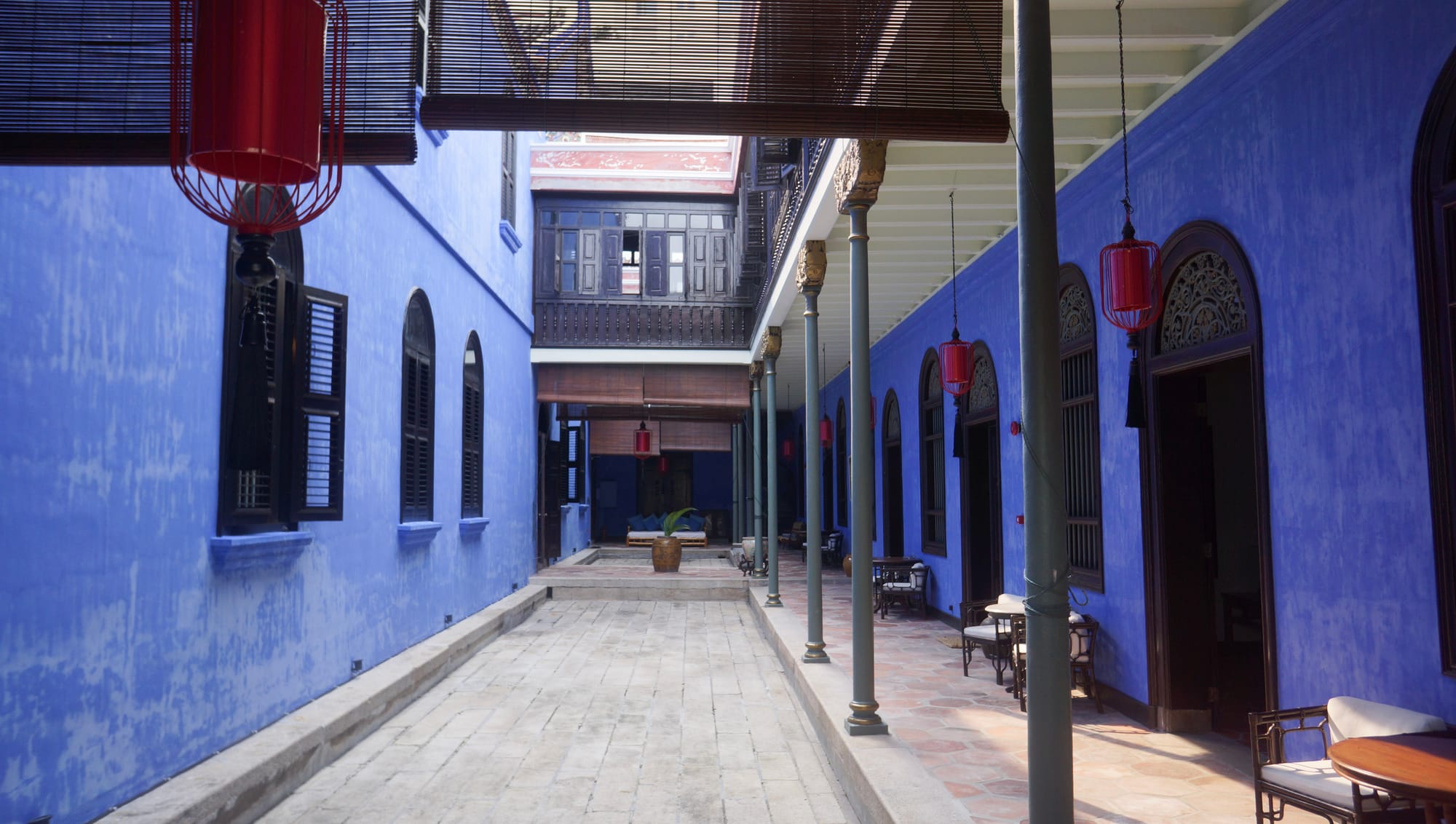
Construction on the house began in the 1880’s. His seventh wife, 50 years younger than him, lived there. Only women were allowed to live and work in the home at the time. When Cheong died, he bequeathed the house and the company to the family. Only when the last member of the family passes away can the house and the companies be sold. The final family member died in 1989. At the time, the house was being used as a rooming house. There was no running water, no electricity and the government was threatening to tear it down. The home needed extensive work to restore it to its former grandeur.
The house itself follows a lot of the tenets of Fung Shui. The back of the house faces the mountain, while the front faces the sea, allowing the wind to flow through the house. It is also built on a slope, so water from rain can flow out of the house as well. The 38-room mansion is perfectly symmetrical, with the same number of staircases, rooms, flowers, plants, and carvings on each side.
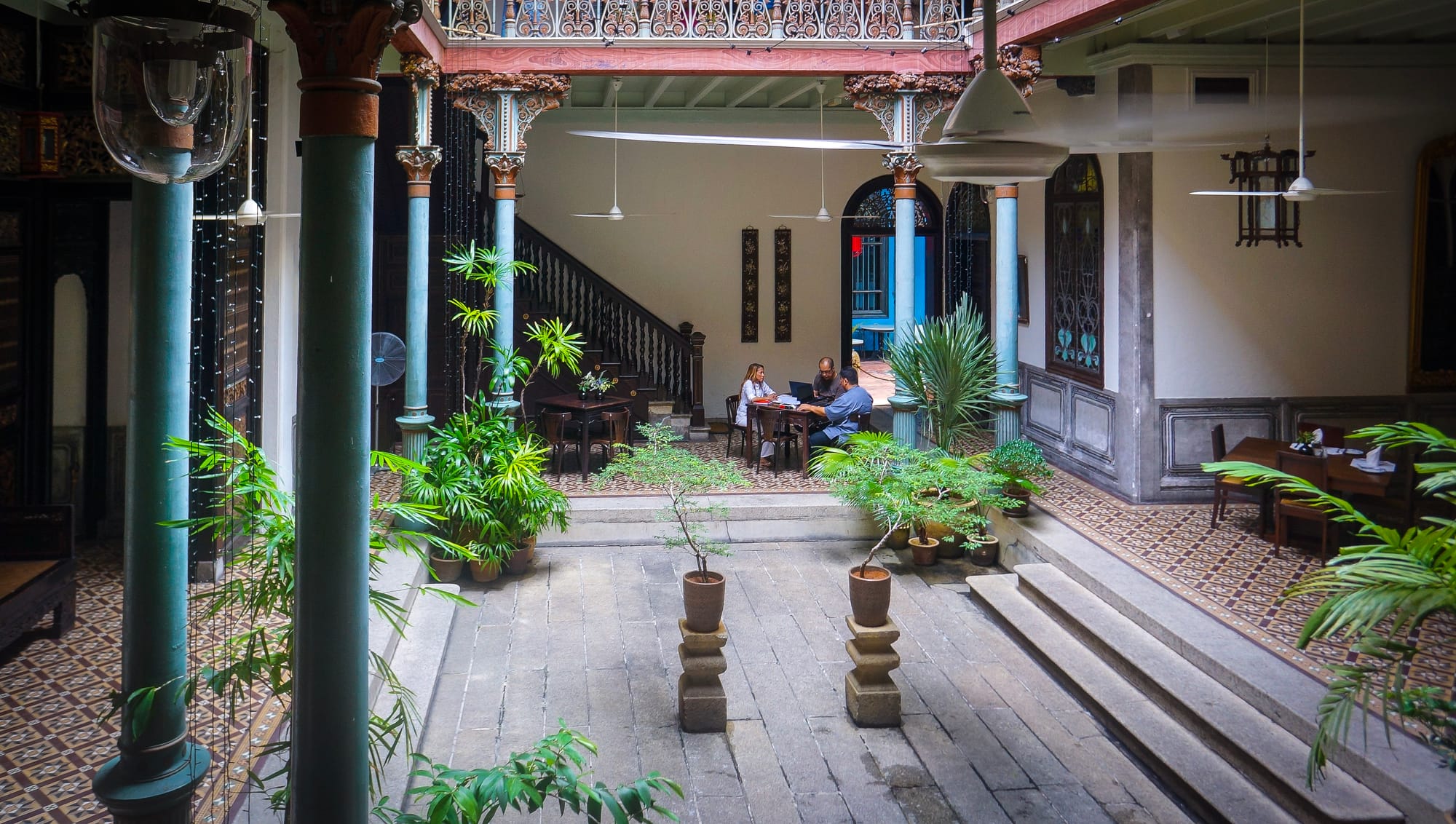
The Mansion blends Chinese and European architecture and styling. Carvings of butterflies, representing love and romance in Chinese culture, and bats, representing luck and fortune, are throughout the house. The marble and wood in the house are all fake, made from paper, but shaped to make it look like it is real. It was the style of the time in Europe.
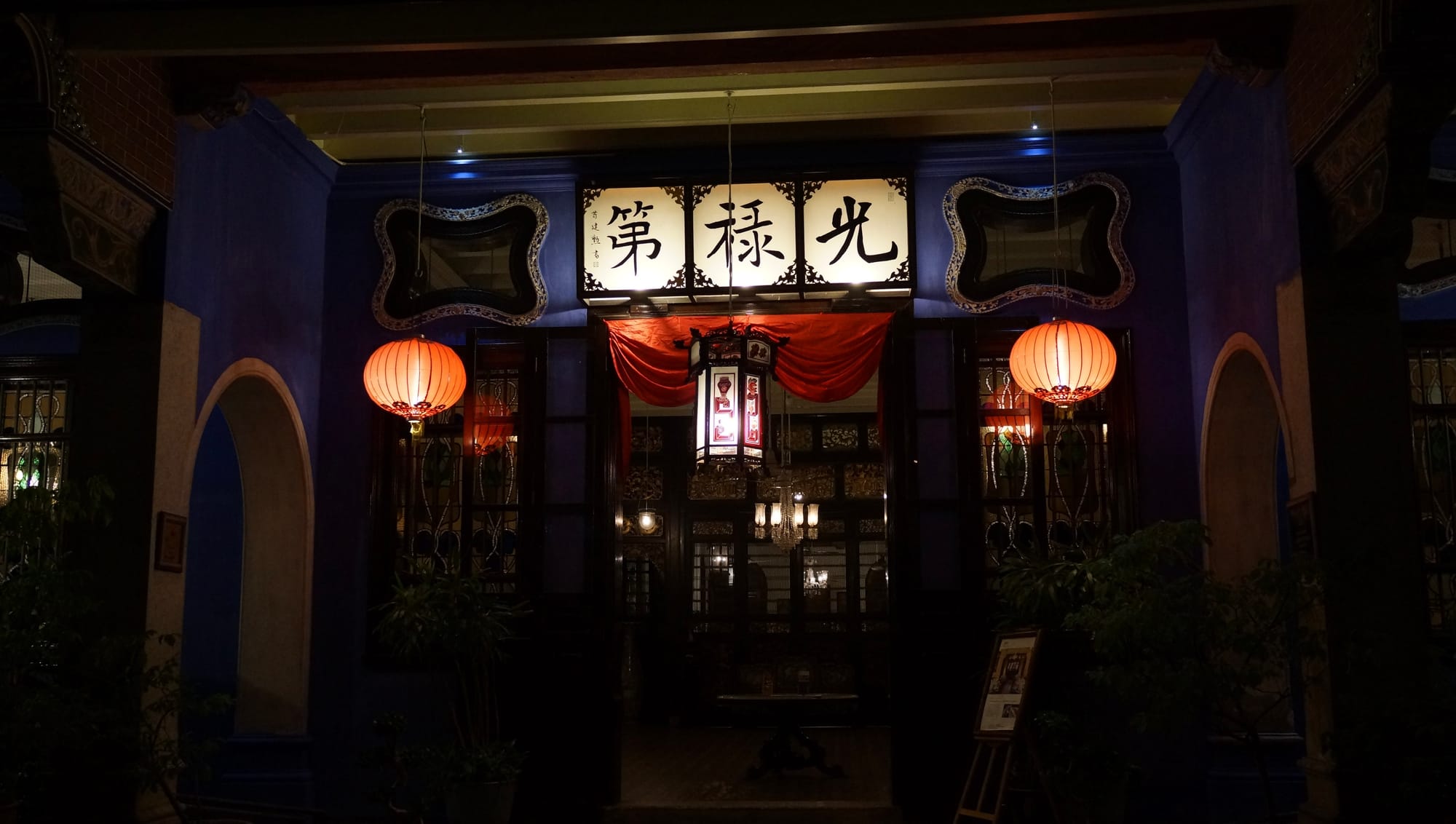
In 2000, after years of restoration, the Mansion won the ‘Most Excellent’ Heritage Conservation Award from the United Nations Educational, Scientific, and Cultural Organization (UNESCO). Today, the Mansion runs as a boutique hotel and restaurant.