San Tin - A Village in Flux
A small village in northern Hong Kong is undergoing many changes due to its proximity to Mainland China, causing a lot of frustration among residents.
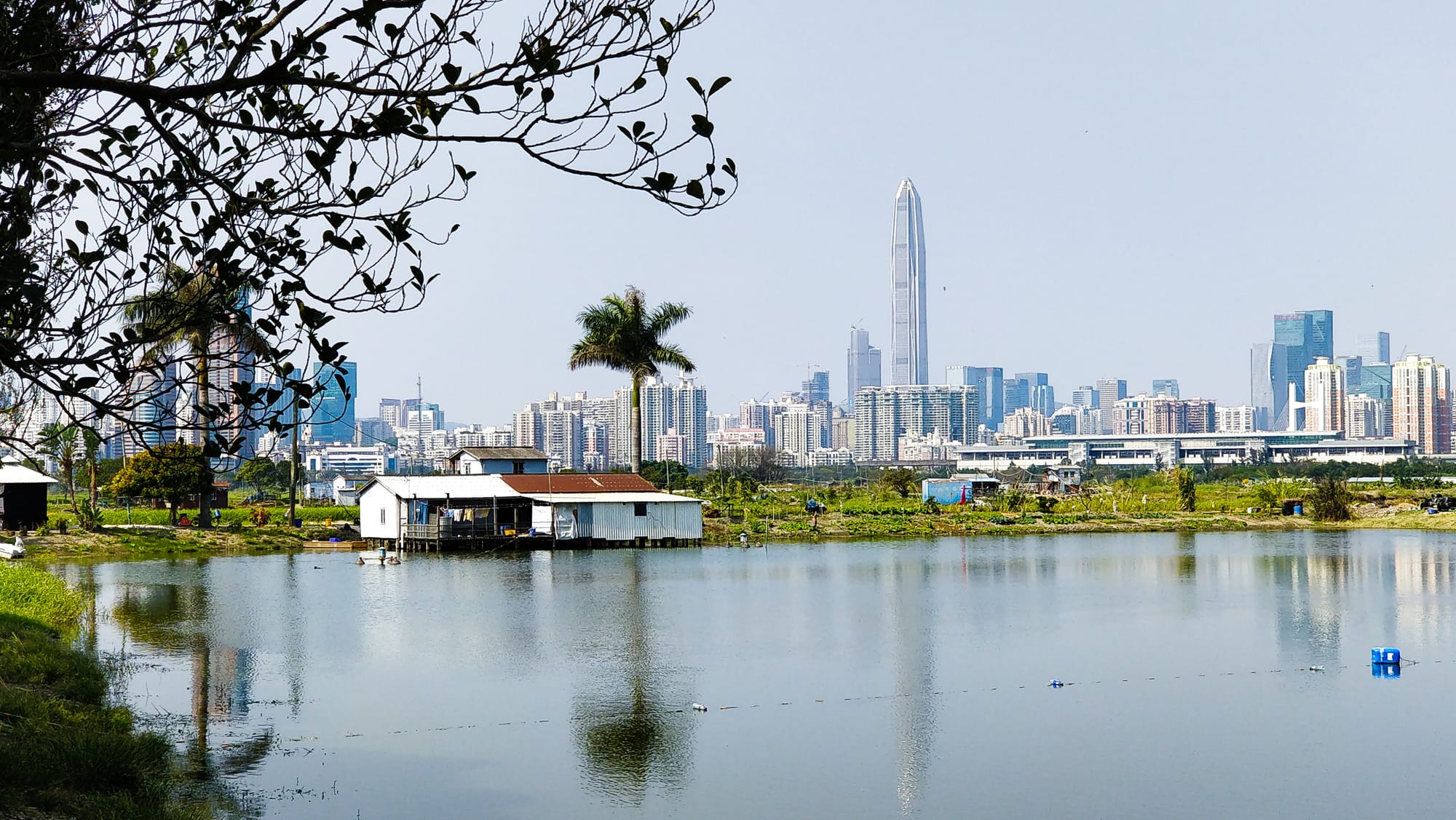
Rita Lee has lived most of her life in the small village of San Tin, a 5-minute bus ride to the Lok Ma Chau border with China. She talks about how the land in front of her small shop used to be green rice paddies, but now it is grey with large transport trucks making their way across to Shenzhen. She complains about the exhaust fumes from the trucks, but most of her complaints are about the sidewalks being filled with Mainland Chinese repacking their bags to hide their milk powder to illegally smuggle it back into China, where it can be resold at a huge profit.
“People are coming to Hong Kong to buy things, which is not good for us,” said Lee, 66. “It is not good that the mainland produces so many fake things. I hope the Mainland can produce better stuff so they don’t come here to buy our stuff and cause problems.”
The village of San Tin, with a population under 500, has been changing due to a large influx of Mainland Chinese traders who come to buy goods and resell them in China. These traders have placed great strain on the local school and transportation system and have led to greater tensions between them and the villagers. The pressures on San Tin reflect the greater pressures on all of Hong Kong.
Citizens in 49 cities, including Shenzhen, can cross the border to Hong Kong as many times as they wish after obtaining a multiple-entry visa under the Individual Visit Scheme. According to the Hong Kong Tourism Board, last year, 40 million visitors came from China. The tourism board projects the total number of visitors from China to rise to 100 million by 2023, according to a report issued in February this year.
A number of food safety scandals, such as the milk powder controversy in 2008 and the recent rotten meat scandal affecting several fast-food shops in China, have led many to come to Hong Kong to buy products and resell them in China at a large markup. These parallel traders have driven up prices and created shortages of some items, such as milk powder, prompting the Hong Kong government to restrict how much Chinese are allowed to bring back. Smuggling items into China has become a lucrative business not only for the people in China but also for people in Hong Kong.
“Some people who are in the restaurant business quit their job to be part of the trading business,” said Lee. “They make $30 an hour in the restaurants, but if they change to this business they can make twice.”
According to District Councillor for San Tin, Chi Sheung Man, the Hong Kong Immigration Department has been tightening restrictions on traders at the Lo Wu border. This has forced them further west, with a centre in San Tin. Many traders have rented or bought storage containers in the village to store the goods, then employ people to smuggle them back into China. Last year, according to the Immigration Department, over 1,062 were arrested for parallel trading, and 12,800 were denied entry to Hong Kong for the same reasons.
Some of the storage containers are found behind the village school, Tun Yu School, where 85 percent of the students are from China. Since people in Guangdong are allowed to cross the border, many moms came to have their babies here, and thus their children have the right to a Hong Kong education. The number of people trying to get into Tun Yu School has caused many strains. For the first time in its 96-year history, the school had to hold interviews to admit students to Primary 1, as 147 students applied for 90 spots. The school has also increased its class size from 25 four years ago to 30 students per class, meaning the teacher-student ratio is getting worse.
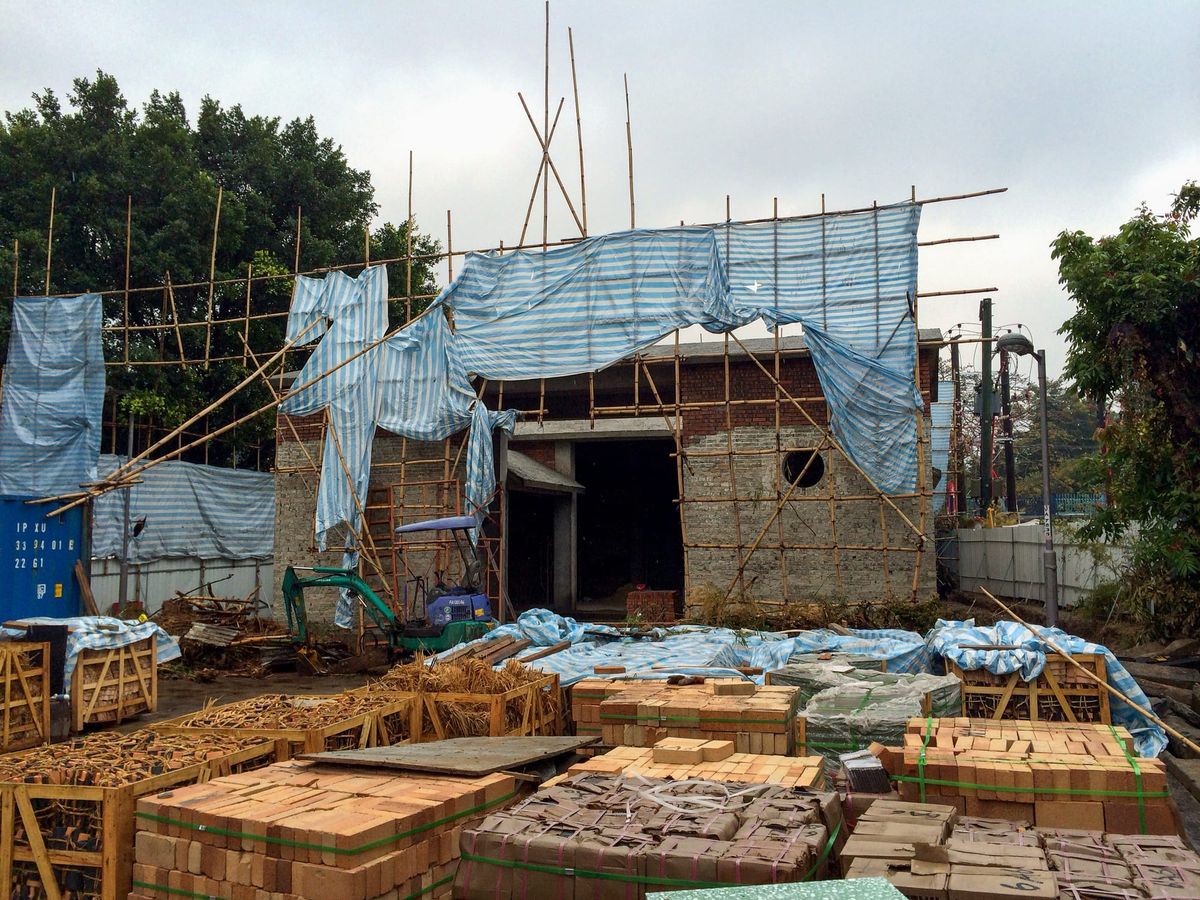
The school has constructed a classroom in the hall to accommodate an extra class and has applied to build additional classrooms on the basketball courts to double its size. If approved, construction will begin next year and will not be finished for two years after. An additional pressure on the school is when the students go home at 3:30 pm every day.
The students must wait with the traders and with students from other schools in Yuen Long who are dropped off to take the same mini-bus. In all, more than 100 people line up for the minibus at the end of each school day. Before, students at Tun Yu School waited 15 minutes for a mini-bus; now it takes an hour or two just to get on the bus.
“Since July, there are tons of parallel traders fighting for the mini-bus to cross the border. The fights affect about 60 students,” said Hang Hin Chan, Principal at the school, told the Ming Pao Newspaper. “The mini-bus gives priority to the students to board the bus after school. The parallel traders are not happy about this and swear at the kids. We ask our teachers to help the kids board the bus because of the swearing by the traders.”
Mr Chan has been asking for help from the village and from the district councillor, but the situation has not improved. The mini-bus company has increased the frequency of service, but students still face long waits. Some students have switched to taking a different mini-bus to Sheung Shui, then the MTR to Lok Ma Chau, but it takes an hour or more and costs almost double the mini-bus fare. It is too much time and money for some students. The school has asked the MTR to reduce its fee for cross-border schoolchildren by half. The MTR rejected the idea.
In February, a study by the Transportation Department issued a report stating that the East Rail Line, connecting the border with Hong Hum Station, has already reached a capacity of 4 people per square meter, and the corporation needs to find ways to alleviate congestion on the line. Many people do not think there is any way to help solve the problems caused by the influx of people from Mainland China into Hong Kong.
“I don’t think the government can help,” said Lee. She also said that the government is “always China first so they can’t do anything to help us.”